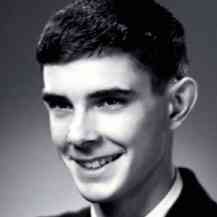
Quick Info
| Profession | Filmmaker |
|---|---|
| Nationality | Hungarian |
| Date of Birth | 21/07/1955 |
| Age | 70 years (died on 06, Jan, 2026) |
| Birthplace | Pécs, Hungary |
| Date of Death | 06/01/2026 |
| Zodiac Sign | Cancer |
Latest News about Béla Tarr
06/01/2026
Béla Tarr, the renowned Hungarian filmmaker and founding figure of slow cinema, died on 6 January 2026. His death marked the loss of a singular cinematic voice whose uncompromising vision and moral seriousness left a lasting imprint on world cinema. Tarr had withdrawn from feature filmmaking after completing The Turin Horse in 2012 but remained active through installations, teaching, and international film courses.
Do you like Béla Tarr?
You can vote only once.
95% like · 5% dislike
Bio/Wiki
| Biography | Béla Tarr was a Hungarian film director, screenwriter and producer renowned for his distinctive cinematic style characterized by stark black-and-white visuals, extended long takes, languid pacing, and an absence of traditional plotting. His films explored existential themes and often focused on marginalized, desperate characters in bleak landscapes. He became a founding figure of the slow cinema genre, most notably with his influential 1994 film Sátántangó, which is frequently cited in scholarly polls of the greatest films ever made. Initially aspiring to become a philosopher, Tarr considered filmmaking as a hobby before it became his life's work. He was widely regarded as one of the most internationally respected Hungarian filmmakers and a defining figure of modern cinema. |
|---|
Physical Stats & More
| Eye Color | Grey |
|---|---|
| Hair Color | Grey |
Educational Qualification(s)
| Degree | Film Directing |
|---|---|
| Institution | Academy of Theatre and Film (Színház- és Filmművészeti Egyetem) |
| Years Attended | 1977-1982 |
Personal Life
| Tarr began his career at age 16 as an amateur filmmaker after receiving an 8mm camera from his father. | |
| His first job after high school was as a worker at a shipyard. | |
| He later became a receptionist at a cultural centre while pursuing filmmaking. | |
| He was a self-described lifelong anarchist who began his career in the final years of the communist regime. | |
| At odds with the political and cultural environment in Orbán's Hungary, Tarr moved operations to Sarajevo in the mid-2010s. |
Relationships & More
| Marital Status | Married |
|---|---|
| Marriage Date | 1978 |
| Wife | Ágnes Hranitzky |
Family
| Father | Béla Tarr (deceased) |
|---|---|
| Mother | Mari Tarr (theatre director) (deceased) |
| Siblings | György Tarr (painter) |
| Spouse | Ágnes Hranitzky |
| Children | Réka Gaborjani-Szabó |
Career
| Debut Film | Családi tűzfészek (Family Nest) (1977) |
|---|---|
| Last Film | A torinói ló (The Turin Horse) (2012) |
| Awards and Honors |
|
| Notable Works |
|
| Filmmaking Style | Tarr is celebrated for his long takes, often ranging from six to eleven minutes, employing slow, flowing camera movements that create a profound sense of the passage of time. His films are distinguished by stark black-and-white visuals, extended long takes, languid pacing, and an absence of traditional plotting. He used a remarkably mobile camera to exhaustively track the complete arc of actions. His work is rooted in the documentary leanings of the Budapest School, combining exacting fidelity to space and time with theatrical, abstract and claustrophobic storytelling. |
| Career Milestones |
|
| Collaborators |
|
| Production Companies |
|
Some Lesser Known Facts
| 1. Béla Tarr was raised in an artistic family, with significant early influences from both parents. | |
| 2. He showed political engagement from a young age, carrying Mao’s Little Red Book to school instead of traditional materials. | |
| 3. His passion for film began at the age of 14 when he received an 8mm camera from his father. | |
| 4. Despite facing political barriers to studying filmmaking, he persevered and started making amateur films. | |
| 5. His film 'Sátántangó' took over seven years to complete and is known for its extraordinary length and depth. | |
| 6. Béla Tarr was raised in an artistic family in Pécs, with both parents working in theatre, providing significant early influences. | |
| 7. His passion for film began at age 14 when he received an 8mm camera from his father. | |
| 8. Despite facing political barriers to studying filmmaking under the communist regime, he persevered and started making amateur films. | |
| 9. He made a 1982 television version of Macbeth, compressing the play into two takes, one nearly an hour long. | |
| 10. The Outsider (1981) was his only feature film shot in colour during his early career; he later returned exclusively to black and white. | |
| 11. He was also a producer on numerous shorts and features by other filmmakers, including Kornel Mundruczó's Johanna (2005) and Valdimar Johansson's Lamb (2021). | |
| 12. As a founding figure of slow cinema, his influence extends far beyond Hungarian cinema to filmmakers and critics worldwide. |