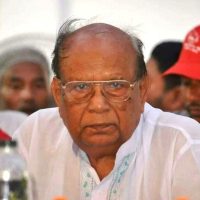
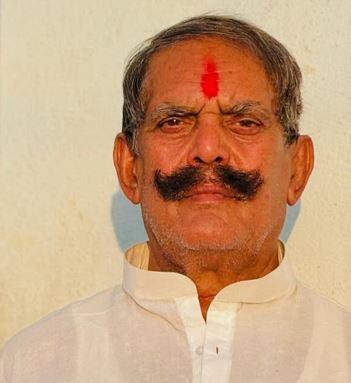
Bio/Wiki
| Profession |
|
|---|---|
| Famous for | Being a bahubali (strongman) of Mokama |
Physical Stats & More
| Height | 5' 9" (175 cm) | ||||||
|---|---|---|---|---|---|---|---|
| Weight | 60 Kg (132 lbs) | ||||||
| Eye Color | Black | ||||||
| Hair Color | Salt & pepper | ||||||
| Body Measurements |
|
Educational Qualification(s)
| School | Madhya Vidhayalay, Karara, Patna |
|---|---|
| Educational Qualification | 8th pass (passed in 1967) |
Personal Life
| Religion | Hinduism |
|---|---|
| Caste | Yadav |
| Zodiac sign | Libra |
| Hometown | Mokama, Bihar, India |
Relationships & More
| Marital Status | Married |
|---|
Family
| Father | Prasadi Yadav |
|---|---|
| Siblings | Braj Nandan Yadav (elder) |
| Children | 2 Sons: Ram Bhaju Yadav, Tapeshwar Yadav |
| Grandchildren | 2 Grandsons: Neeraj Kumar, Raviranjan Kumar |
Career
| Political Party | Janata Dal (Secular) |
|---|---|
| Political Journey | Dular Chand Yadav contested the Bihar Legislative Assembly elections from Barh constituency in 2010. He was known for his influence in politics and his strong ties with various leaders, including Lalu Yadav and Nitish Kumar. His career was marked by a turbulent image, often involved in controversies, fights, and necessary legal challenges. In 2025, he supported a candidate during the Bihar Assembly elections, leading to a tragic end during a violent confrontation. |
Social Media
| https://www.facebook.com/dularchand.yadav.98096/ |
Some Lesser Known Facts
| Dular Chand Yadav was known as a respected figure from Mokama, renowned for its influential political atmosphere. | |
| He gained recognition as a wrestler before transitioning into politics and deepening his local influence. | |
| His political career was punctuated by numerous legal issues, drawing attention as both a political worker and a figure entwined in local crime. | |
| Despite facing serious allegations, he maintained relationships with key political figures and influenced local elections. | |
| His violent death stirred significant political debate, highlighting ongoing issues of law and governance in the region. |