
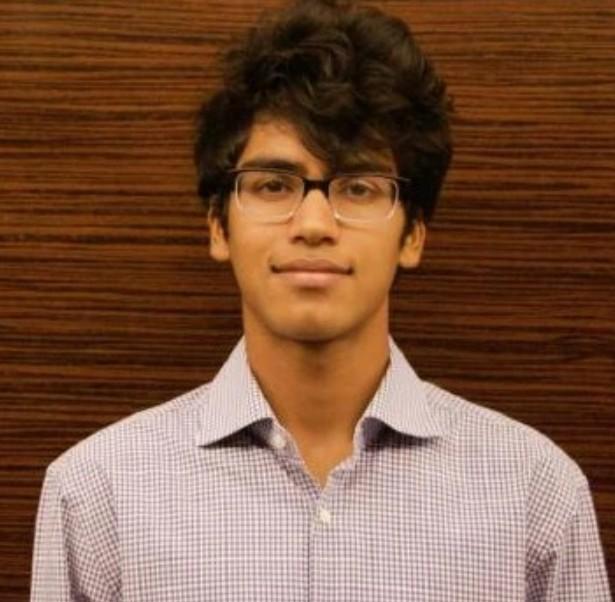
Bio/Wiki
| Profession | Software Engineer |
|---|
Physical Stats & More
| Height | 6' 1" (185 cm) |
|---|---|
| Eye Color | Black |
| Hair Color | Black |
Educational Qualification(s)
| School | Horace Mann School, Bronx, New York, United States (2014-2018) |
|---|---|
| College/University | Massachusetts Institute of Technology, Cambridge, Massachusetts |
| Degree | Bachelors in Computer Science and Mathematics from Massachusetts Institute of Technology, Cambridge, Massachusetts (2018-2022) |
Personal Life
| Hometown | New York, United States |
|---|---|
| Marital Status | Unmarried |
Family
| Father | Arvind Sanger (businessman) |
|---|---|
| Mother | Shilpa Sanger (orthodontist, angel investor, entrepreneur) |
Career
| Overview | Aman Sanger has established himself as a prominent figure in the software engineering and AI sector. His journey began when he developed a passion for programming and artificial intelligence at a young age. |
|---|---|
| Early Experience | Starting at the age of 14, he began writing computer programs. In May 2019, he worked as a Software Engineering Intern at Google for four months. |
| Professional Growth | He also served as an Investment Associate Intern at Bridgewater Associates and worked in research at an AI consultancy in Greater Boston. |
| Entrepreneurship | Alongside his peers, Aman co-founded the company ‘Anysphere’ in 2022, which developed Cursor, an AI-powered code editor aimed at enhancing software engineering productivity. Despite initial struggles with its popularity, the team innovated rapidly to improve its features. |
| Current Status | As of 2025, Anysphere is valued at approximately $29.3 billion, with Aman owning a 4.5% share worth over $1.3 billion. |
Social Media
| https://www.instagram.com/amanrsanger/ | |
| https://x.com/amanrsanger | |
| https://www.linkedin.com/in/aman-sanger-482243171/ |
Some Lesser Known Facts
| Aman developed a keen interest in programming and AI from an early age. | |
| He began his programming journey at 14 years old. | |
| Aman participated in squash championships during his college years. | |
| His team also created innovative features for Cursor, such as Command K for editing with instructions. | |
| He believes that the time and capacity of human programmers are significant challenges to rapid AI progress. |