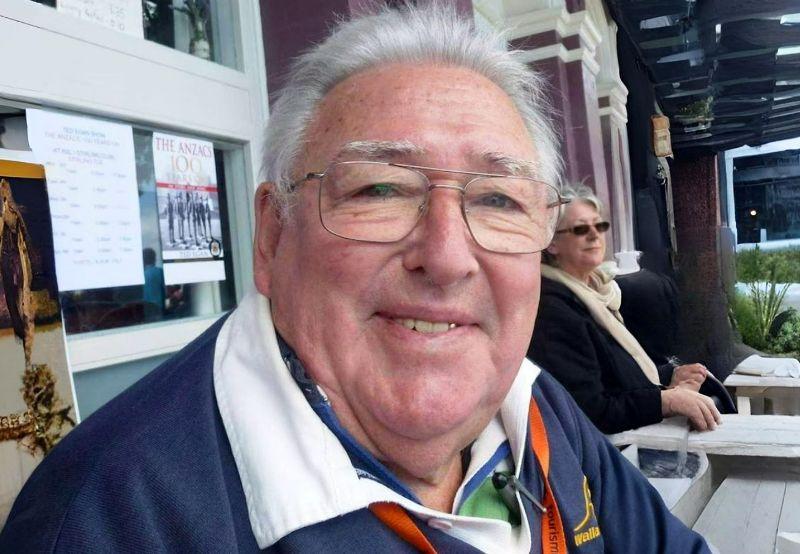
| Ted Egan had a fascinating childhood in Melbourne, Victoria. |
| He ventured to the Northern Territory in 1949, seeking a new life and job opportunities. |
| His work in the Aboriginal Affairs department involved community patrolling and various outdoor tasks. |
| Egan later focused on education, teaching in remote bush schools. |
| He was a founding member of the Works and Housing Football Club and St Mary’s Football Club. |
| During a flood in 1965, he survived for six weeks at Newcastle Waters Station by hunting local animals. |
| Egan co-wrote the song 'Gurindji Blues' in 1969, which became a significant anthem during the land rights protest. |
| He produced numerous albums highlighting themes of outback life and Aboriginal history. |
| Egan authored books, including an autobiography and works focused on Indigenous culture. |
| In 1989, he narrated a documentary series showcasing iconic Australian people and places. |
| His performance of 'Granny' (2002) was notably his favorite. |
| He actively contributed to efforts for reconciliation through the National Reconciliation Council. |
| Egan was honored by the Khungarakung people with the name 'Namiuk Kwaruk'. |