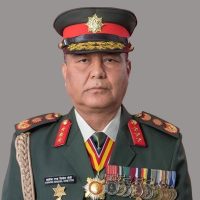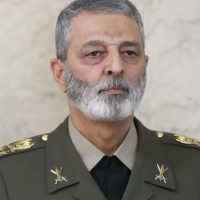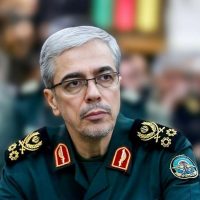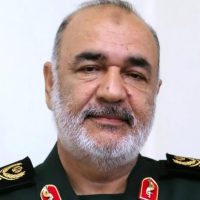
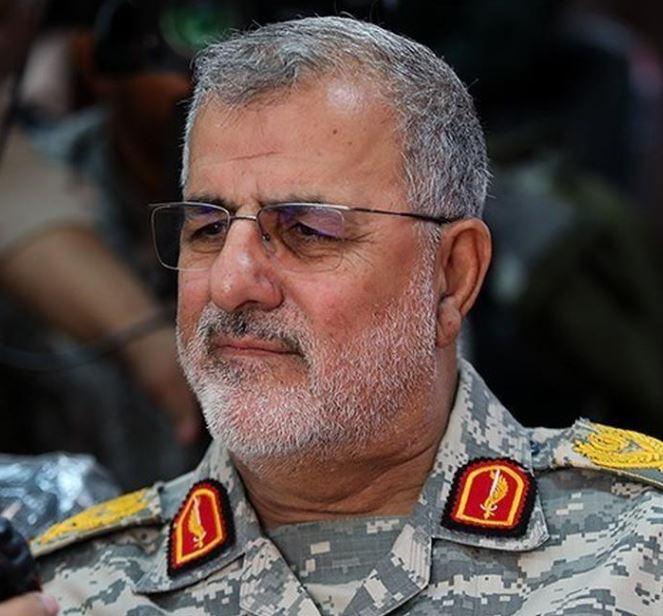
Bio/Wiki
| Other Names |
|
|---|---|
| Famous for | Being the commander of the Islamic Revolutionary Guard Corps (IRGC) |
Physical Stats & More
| Height | 5' 8" (173 cm) |
|---|---|
| Weight | 75 Kg (165 lbs) |
| Eye Color | Black |
| Hair Color | Grey |
Educational Qualification(s)
| College/University | Tehran University |
|---|---|
| Degree | PhD in Political Geography |
Personal Life
| Religion | Islam |
|---|---|
| Food Habit | Non-vegetarian |
| Hometown | Markazi, Iran |
Relationships & More
| Marital Status | Married |
|---|
Career
| Overview | Mohammad Pakpour was a prominent military figure who rose to senior ranks within the Islamic Revolutionary Guard Corps (IRGC) after its formation post-1979 Iranian Revolution. He played pivotal roles during various military confrontations, including the 1979 Kurdish rebellion and the prolonged Iran-Iraq War. His leadership of the 8th Najaf Division and the 31st Ashura Division marked significant highlights in his career. Over the years, Pakpour held various important positions, including that of the IRGC Ground Forces commander and later IRGC commander, showcasing exceptional skills in military strategic operations and modernization initiatives. |
|---|
Some Lesser Known Facts
| Mohammad Pakpour became a senior officer in the IRGC soon after its establishment. | |
| He actively participated in operations against insurgencies and was involved in strategic military positions during the Iran-Iraq War. | |
| His leadership extended to planning and executing significant military exercises, reflecting his commitment to enhancing the operational capabilities of the IRGC. | |
| Pakpour faced international sanctions by multiple countries, including the U.S. and EU, due to his activities within the IRGC. | |
| He was appointed as the head of the IRGC after his predecessor's death during military operations. | |
| In the turbulent political landscape in late 2025 and early 2026, he assumed a critical role, warning foreign powers of potential military responses. |